
The best emergency plan for an allergic pet is the one that keeps the emergency from ever happening, and that starts with knowing exactly what your dog or cat reacts to. Allergy testing, carefully run food trials, and a written record of every reaction, however minor, turns vague suspicion into a trigger list you can actually avoid. Most allergic disease lives at the manageable end of the spectrum, the itchy skin and recurring ear flare-ups that return each season, and treating that tier early keeps a small problem from compounding into a bigger one. Every plan still needs a backstop: sudden hives or facial swelling mean a same-day call, and vomiting, collapse, or trouble breathing within minutes of an exposure means your pet needs emergency care immediately.
At Sixes Animal Hospital at Bridgemill, we treat allergy care as a plan we build with you rather than a prescription we hand down: allergy testing to identify triggers, structured food trials when diet is the suspect, and a shared record of how your pet responds over time. Our individualized preventative plans are shaped around your pet’s history and lifestyle here in Canton, so prevention fits the actual animal in front of us. Request an appointment and we will map out your pet’s triggers together, along with the exact signs that mean you should skip the appointment book and call us right away.
The Fast Version for an Itchy Pet
- Allergic reactions in dogs and cats run a wide spectrum, from chronic itchy skin that needs steady management to anaphylaxis that needs emergency care within minutes.
- Hives and sudden facial swelling call for a same-day visit, while vomiting, collapse, pale gums, or trouble breathing after an exposure mean your pet needs emergency care immediately.
- Most allergy trouble is the manageable, itchy-skin kind, and treating it early keeps small flares from snowballing into repeated infections and misery.
- The strongest plans go after the root cause with trigger identification, food trials, parasite prevention, and immunotherapy rather than just chasing each flare-up.
What Actually Triggers an Allergic Reaction in Dogs and Cats?
Most reactions trace back to one of a few culprits: airborne environmental allergens, something in the diet, or an insect bite or sting. Each group behaves differently, and knowing which one you’re dealing with shapes both how urgent the moment is and how we head off the next flare.
The most common environmental reaction is atopic dermatitis, an itchy, inflamed skin response to airborne triggers like pollen, grass, mold, and dust mites that usually flares with the seasons.
| Trigger type | Common examples | Typical pattern |
| Environmental | Pollen, grass, mold, dust mites | Itchy skin and ears, often seasonal |
| Food | Specific proteins such as beef, chicken, or dairy | Year-round itch, sometimes with GI upset |
| Insects and parasites | Flea bites, bee stings, wasp stings | Steady itch to sudden, fast swelling |
Puppies and kittens can start reacting young, often during their first spring in Canton or their first real run-in with fleas.
Can Vaccines and Medications Cause Reactions, Too?
The vast majority of dogs and cats sail through their shots with nothing more than a quiet afternoon, and genuine vaccine or medication reactions stay uncommon. They do happen, though, which is why the hours right after any injection or new prescription are worth extra attention.
Most vaccination reactions amount to a day of mild soreness or lower energy, but facial swelling, repeated vomiting, or labored breathing in the minutes to hours afterward warrant a prompt call to us. Telling us about any past reaction before a vaccine or a new prescription changes what we reach for, and our wellness plans build that history review into your pet’s regular exams so nothing slips through.
How Do I Know How Serious My Pet’s Reaction Is?
Allergic reactions sort into three broad tiers of urgency, and reading which tier you’re in tells you how fast to move.
| Urgency tier | What it looks like | What to do |
| Manageable | Ongoing itch, recurring ear flares, licking and chewing | Book a regular appointment |
| Same-day | Hives, facial or muzzle swelling, spreading welts | Call us today |
| Emergency | Vomiting, collapse, weakness, pale gums, trouble breathing | Head to emergency care now |
On the way in, a few small things help. Stay calm, note the timing and any likely trigger, and bring the suspect along if you safely can, whether that’s a chew, a new food, or the stinger. Skip inducing vomiting and skip human medications unless we’ve told you a dose, and keep an eye on your pet’s breathing during the drive. Glance at your pet’s gums, too: healthy gums are a steady bubblegum pink, while pale or bluish gums mean the body isn’t moving enough oxygen, which puts the situation firmly in emergency territory. We provide urgent and emergency care during our regular hours; if a crisis hits after we’ve closed, drive straight to the nearest veterinary ER.
What Do Chronic Allergy Skin Problems Look Like?
Most allergic dogs and cats live at this end of the spectrum, where the immune system’s overreaction shows up as itchy, inflamed skin rather than a sudden crisis. It’s not an emergency, but left alone it snowballs into secondary infections, so it needs a real workup rather than a shrug.
In Dogs: Paws, Ears, and Raw Spots
Dogs broadcast their allergies through the skin: persistent licking and chewing, redness, and thinning fur. The itch often concentrates in a few classic spots, including the feet and the ears, where chronic infection sets in. Hot spots erupt when a dog licks and chews one itchy patch until the skin breaks down into a raw, oozing, often infected sore, sometimes within a single day.
In Cats: The Quiet Groomers
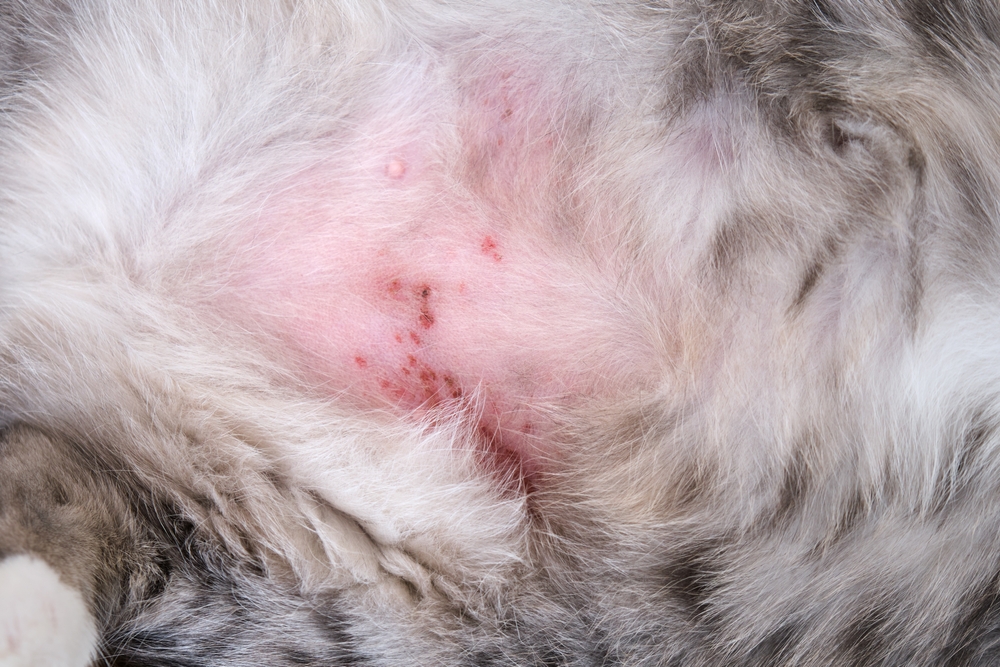
Cats are subtler, and their allergies tend to surface in three patterns: symmetrical hair loss from overgrooming, miliary dermatitis with tiny crusty bumps scattered through the coat, and eosinophilic granuloma complex with ulcerated lesions on the lips, belly, or thighs. Because cats groom in private, overgrooming usually shows up as smooth bald patches along the belly and legs rather than scratching you ever catch in the act.
Contact Reactions
Some pets react to what their skin touches, not what they breathe or eat. Laundry detergents, fabric softeners, new rugs, floor cleaners, and grooming products are frequent offenders, and the rash tends to land on thin or hairless areas like the belly, groin, and chin.
When Do Hives and Breathing Changes Need Same-Day Care?
The middle tier is where a reaction is clearly more than a chronic itch but hasn’t yet turned life-threatening, and it deserves a prompt call the same day. Hives, swelling, and new breathing changes belong here, because they can either settle with treatment or build toward something far worse.
Hives are raised welts that swell up within minutes to hours of exposure, and because they can be the opening chapter of a much bigger reaction, wait-and-see is the wrong call. Allergic bronchitis and feline asthma can both escalate quickly once triggered, and any coughing, wheezing, or effortful breathing in a cat is a reason to call now. Insect stings usually stay minor, but they cross into urgent territory when they land on the face, mouth, or throat, when several land at once, or when swelling comes packaged with drooling, weakness, or a change in breathing.
What Happens When an Allergic Reaction Becomes Anaphylaxis?
Anaphylaxis is a true medical emergency: a sudden, whole-body allergic reaction that can turn life-threatening within minutes of an exposure, so it always means immediate care rather than a phone-and-wait. What makes it tricky is that it announces itself very differently in dogs than in cats.
In dogs, anaphylaxis often leads with the gut, producing sudden vomiting, diarrhea, weakness, collapse, and pale gums that can be mistaken for a severe stomach illness. Cats take the opposite route, funneling the reaction into their lungs. Severe respiratory distress with open-mouth breathing, which is always abnormal in a cat, is the hallmark, and it can spiral fast. If you see any of these signs, do not wait for an opening: call us right away, or drive straight to the nearest emergency hospital if we’ve already closed for the day.
How Do We Treat an Allergic Reaction?
Treatment splits along the same lines as the reaction itself: a true emergency gets fast, hands-on stabilization in the hospital, while chronic allergic skin disease gets a patient, layered plan built over time. In both, the aim is the same: settle the immune system down and get your pet comfortable.
Stabilizing a Severe Reaction
Anaphylaxis moves quickly, so treatment does too. The usual sequence layers epinephrine to reverse the reaction, IV access for fluids and drugs, oxygen support, antihistamines, and corticosteroids, all under continuous monitoring. That monitoring runs for hours past apparent recovery because of the biphasic response, a second wave that can arrive long after the first settles.
Managing Chronic Skin and Ear Flares
Chronic allergy care works in layers rather than one magic pill. The first step is checking for the yeast and bacterial infections that love to piggyback on inflamed skin and ears, and a quick swab usually settles whether one has moved in. Our in-house diagnostics mean we can start that workup the same visit instead of waiting on a send-out. From there, the plan treats the underlying allergy itself, not just the recurring infection it keeps causing.
Could It Actually Be a Food Allergy?
A food allergy is worth suspecting when the itch runs all year instead of tracking the seasons, and it usually centers on a specific protein your pet has eaten for a while. The catch is that no blood or saliva test reliably confirms it, so proving a food allergy takes a carefully run diet trial.
The elimination diet trial is the gold standard: a novel or hydrolyzed protein prescription diet for eight to twelve weeks with nothing else passing your pet’s lips. Strict compliance and veterinary supervision matter, because a single stolen treat can undo the whole trial. Over-the-counter limited-ingredient foods won’t do the job, since cross-contamination during manufacturing routinely sneaks in traces of other proteins. The trial ends with a deliberate reintroduction of the old food, and when the itch comes roaring back, you have your answer.
How Can I Keep the Flare-Ups From Coming Back?
Prevention is where allergy care is won or lost, because a plan that only reacts to flares never gets ahead of them.
Keep Fleas Out of the Picture
Year-round flea control is non-negotiable for an allergic pet, because even a pet mostly allergic to pollen gets dramatically worse when fleas pile on top. In a sensitized pet, flea allergy dermatitis means a single bite can touch off weeks of relentless itching. Steady flea and tick prevention is the single most reliable way to keep that trigger off the table.
Prescription Relief When Itch Won’t Quit
Prescription options have grown a lot in recent years, and the right pick depends on the pet in front of us:
- JAK inhibitors: Oral medications such as oclacitinib (Apoquel) quiet the itch signal within hours, which suits flares that need fast relief.
- Monoclonal antibody: Cytopoint works differently, using a monthly injection of an antibody that intercepts the itch signal, which fits dogs with well-established environmental allergies.
- Cyclosporine: A daily medication that steadily calms the immune response in more severe or year-round cases.
- Corticosteroids: Steroids knock down a rough acute flare quickly, but they’re meant for short stretches, not long-term control.
- Antihistamines: These help a subset of pets, and their low risk makes them worth a trial even though they don’t work for everyone.
- Topical therapies: Shampoos, sprays, mousses, and wipes decrease itching, prevent infection, and improve skin health. Medicated shampoos need at least ten minutes of contact time to do their job, so lather and wait rather than rinse and rush.
Finding and Retraining Against the Trigger
Pinpointing the specific environmental allergens behind the itch takes intradermal or serum allergy testing, and we’ll help you decide when that makes sense for your pet. Immunotherapy takes aim at the root cause, retraining the immune system with customized sublingual drops or desensitization shots over 12 to 18 months. Steer clear of the hair and saliva allergy kits sold direct to consumers, though; they’re unreliable and can send a plan off in the wrong direction.
Simple Support at Home
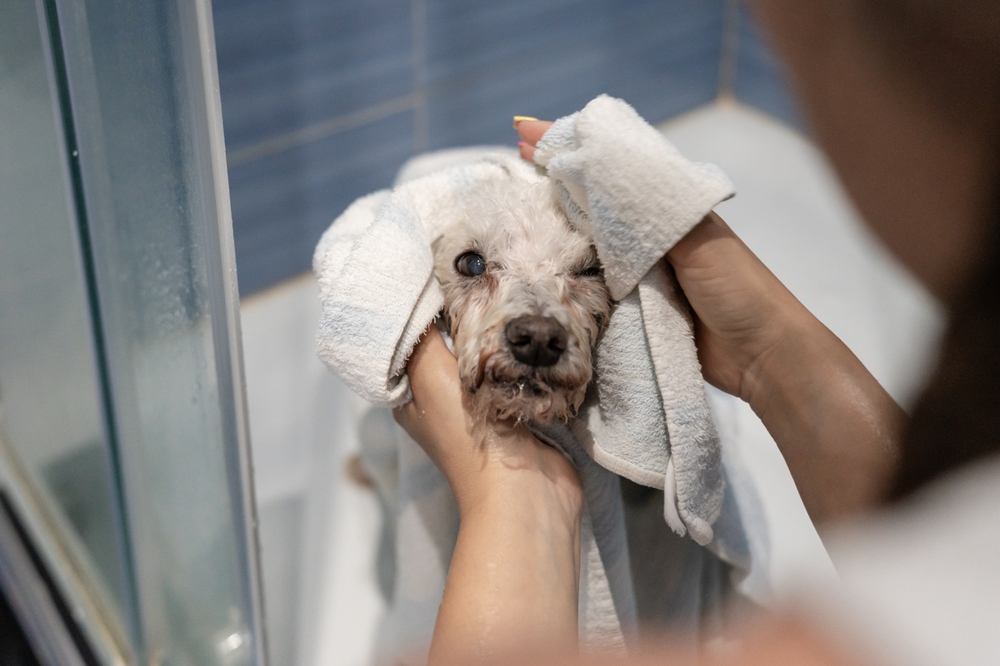
Grooming does real work, physically removing allergens from the coat before the skin can react to them. Between baths, a quick wipe-down after outdoor time, focused on the feet and hairless areas, keeps pollen from absorbing through the skin or being licked off. Omega fatty acid supplements round it out, supporting the skin barrier and dialing back inflammation over the long haul.
Your Pet Allergy Questions, Answered
Can I give my dog Benadryl for an allergic reaction?
Sometimes, but only after checking with us first. Diphenhydramine can help with mild hives or a small sting, yet the right dose depends on your dog’s weight, and some formulations add ingredients that are unsafe for pets. It’s never a substitute for emergency care: if your dog is collapsing, vomiting repeatedly, or struggling to breathe, medication at home only wastes time you don’t have, so call and head in.
Will my pet grow out of their allergies?
Usually not. Environmental allergies in particular tend to be lifelong and can even broaden over the years as a pet becomes sensitized to new triggers. The good news is that outgrowing them isn’t the goal. With steady management, most allergic dogs and cats live comfortable, itch-free lives, and the earlier we start building a plan, the easier those flares are to keep in check.
My cat pulls out fur but I never catch her scratching. Is that allergies?
Often, yes. Smooth, symmetrical bald patches without a scratch in sight are a classic allergy pattern, since a cat can barber away an itchy spot long before anyone notices. That said, fleas, other parasites, pain, and stress can all drive the same behavior, so it’s worth a proper skin workup to sort out the real cause before settling on a plan.
Staying Ahead of Allergy Season in Canton
Canton throws plenty at an itchy pet, from spring pollen drifting off the pines and oaks to fleas that never fully quit through our mild Georgia winters. If your dog or cat is stuck in the loop of scratching, ear infections, and short-lived fixes, let’s build a plan that goes after the cause instead of the latest flare. Book your pet’s appointment and we’ll get started.



Leave A Comment